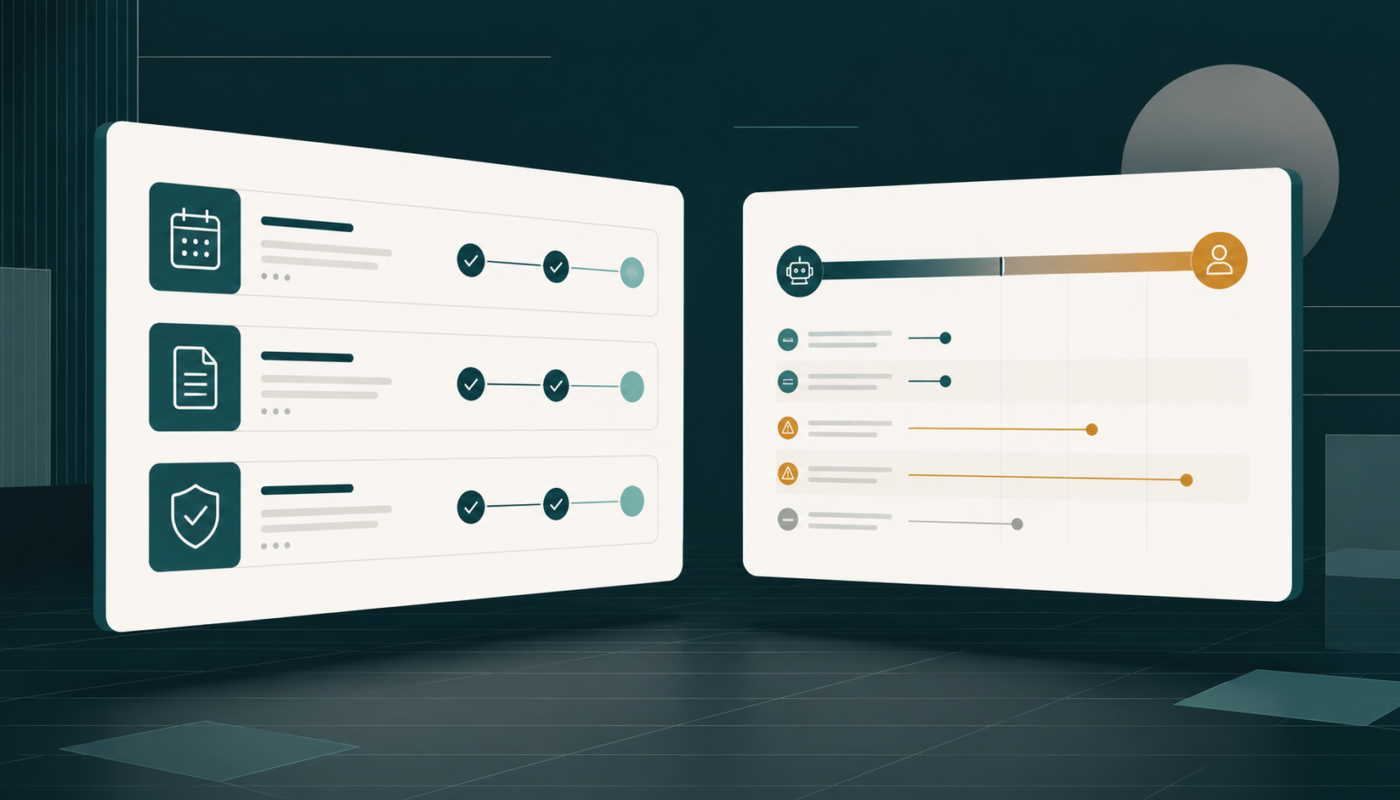
When Workday unveiled its agentic workforce platform at its annual Rising conference last autumn, the reaction across the HR technology industry was somewhere between awe and alarm. The platform — which Workday says can autonomously handle 80% of routine people-operations tasks — represents the most ambitious bet by a legacy enterprise software vendor on AI-driven HR. We spent three weeks testing it with two enterprise customers. What follows is an honest account of what it can and cannot do.
What the Workday Agentic Workforce Platform Does Well
The Workday agentic workforce platform excels at tasks with clear parameters. Scheduling, routine compensation adjustments, benefits enrollment nudges, and compliance documentation all fall within its reliable range. In these areas, the platform is genuinely impressive — faster and more consistent than manual workflows.
That compliance documentation strength is particularly relevant right now. As pay transparency laws spread across states, the volume of compliance documentation HR teams must manage has grown substantially — and this is exactly the category where autonomous execution adds real operational value. Furthermore, predictive workforce analytics vendors are building attrition and skills-gap models on top of the same structured HR data layer that feeds Workday’s automation — which means the platform’s data quality in these narrow domains matters beyond the immediate task.
Advertisement
300 × 250
Where the Workday Agentic Platform Falls Short
The Workday agentic workforce platform struggles with anything requiring nuanced judgment about individual employees. Performance disputes, leave requests with extenuating circumstances, and the thousands of small decisions that define the actual texture of HR work — these are where the platform becomes unreliable.
That limitation has a governance dimension too. AI agents are an identity and access problem that most enterprises are not yet governing — and when autonomous agents make consequential decisions about individual employees, the audit trail and accountability questions become legally significant. Additionally, the EU AI Act is becoming the default standard for AI in hiring, even for US employers — and automated decisioning in performance and leave contexts sits squarely in the category regulators are scrutinising.
This gap between structured and unstructured HR work also connects to a broader shift. AI in talent acquisition is already forcing recruiters to shift from execution to oversight — and the same transition is coming for HR generalists as Workday’s automation handles the routine and leaves the judgment-heavy work to humans. Meanwhile, employee experience platforms are consolidating around continuous listening — designed to surface exactly the kind of nuanced individual signal that agentic automation cannot process.
The 80 Percent Claim: What the Analyst Community Says
“The 80 percent figure is real if you define the work narrowly,” said one HR technology analyst who reviewed our findings. “But the 20 percent that remains is often the 80 percent of the value.”
That verdict echoes a pattern across enterprise AI broadly. 35 CROs share what they actually extract from AI in revenue operations — and the gap between automation coverage and operational value is strikingly consistent across functions. The Workday case is not unique. It is, however, the most visible test of whether a legacy HCM vendor can credibly make the agentic leap.
For context on where Workday sits in the broader HCM competition, Rippling and Workday are competing on two fundamentally different visions of the HCM stack — and the agentic platform is central to Workday’s argument that depth and configurability beat bundled simplicity at the enterprise level. Whether the 80% claim holds up under wider deployment will determine which side of that argument wins the next renewal cycle.