Quest Diagnostics’ 2026 Drug Testing Index tables, published on 10 July, put substituted urine specimens in the general U.S. workforce at 0.03% of tests in 2025, down from 0.11% in 2023. Invalid results over the same two years moved from 0.45% to 0.43%. A screening program that read the 2023 headline about tampering and has not looked at the tables since is working from a number that no longer describes the data.
What the Quest tables show
Quest published the figures in Tables 8 and 9 of the 2026 Drug Testing Index. Table 9 covers the general U.S. workforce and Table 8 covers the federally mandated, safety-sensitive workforce. Both report specimen validity results as a share of all urine tests from 2021 through 2025.
For the general workforce, the substitution rate ran 0.013% in 2021, 0.015% in 2022, 0.11% in 2023, 0.07% in 2024 and 0.03% in 2025. The invalid rate ran 0.26%, 0.31%, 0.45%, 0.46% and 0.43% across the same years. For the safety-sensitive workforce, substitution ran 0.014%, 0.017%, 0.08%, 0.05% and 0.02%, and invalid ran 0.26%, 0.30%, 0.41%, 0.40% and 0.36%.
By our arithmetic, the general-workforce substitution rate fell 72.7% from its 2023 peak to 2025. The invalid rate fell 4.4% over the same period and sits 65% above its 2021 level. The two measures spiked together in 2023, and only one of them has come back down.
The 2023 headline these numbers replace
In its 15 May 2024 release, Quest reported that substituted urine specimens in the general workforce rose 633%, from 0.015% in 2022 to 0.11% in 2023, the highest rate in more than 30 years of annual reporting. Invalid specimens rose 45.2%, from 0.31% to 0.45%. Quest wrote that a substituted or invalid result suggests a specimen has been tampered with in an attempt to conceal drug use.
The 633% figure traveled well because it was a large percentage on a very small base. The underlying rate was 0.11 tests in every 100. A hiring plan should weigh the 0.11 more than the 633. The follow-on tables show the rate falling to 0.03% by 2025, which is within a few hundredths of a point of where it stood in 2022.
Substituted and invalid are different results
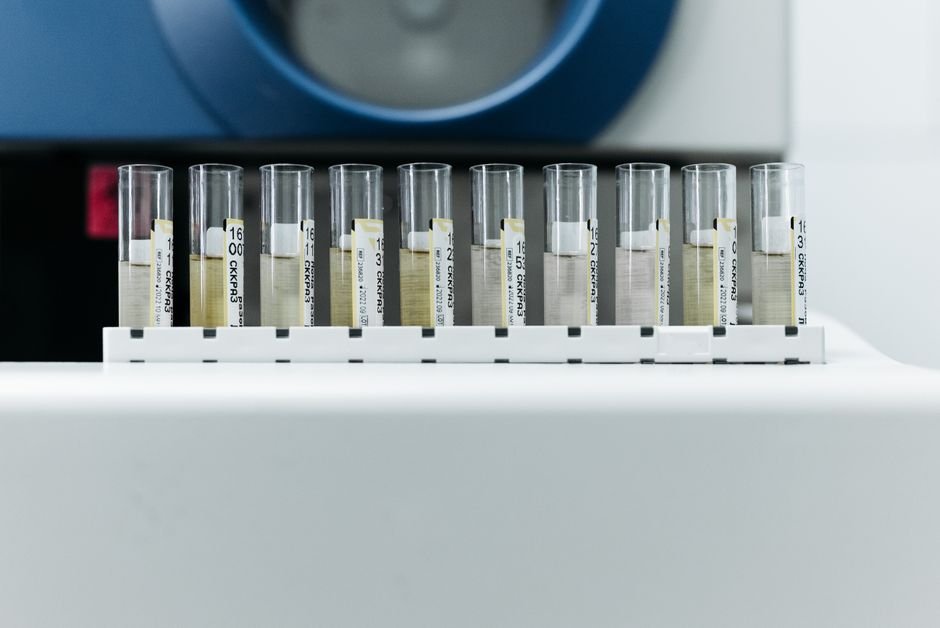
Quest’s 2024 release defines the terms. A substituted result means the specimen is not consistent with normal human urine, based on creatinine and specific gravity values outside the range urine can physiologically produce. An invalid result means the specimen contains an unidentified adulterant or interfering substance, has abnormal physical characteristics that could damage laboratory instruments, or contains a normal constituent of urine at an abnormal concentration.
The first definition describes a specimen that is not urine. The second describes a specimen the lab cannot read. Quest grouped them in 2024 as signs of possible tampering, and that is a reasonable reading of the 2023 jump. The 2025 data gives a reason to separate them. If both had been driven by the same behavior, they would be expected to fall together. The tables do not say why substitution fell or why invalid results held, and Quest’s July release does not offer an explanation for either.
What Quest says about specimen type
The July release was about hair testing. Quest reported that 19.1% of general-workforce workers tested by hair in 2025 were positive, against 13.1% in 2021. Marijuana positivity in hair was 15.1%, in oral fluid 11.1% and in urine 4.4%. Overall urine positivity was 4.3% in 2025, down from 4.4% in 2024.
Quest also made a claim about method. “Hair and oral fluid testing not only capture different windows of use but are also more resistant to tampering and substitution than traditional methods. This gives employers more accurate insight into safety risks,” said Jason S. Hudson, PhD, Scientific Director and Laboratory Director, Workforce Solutions, at Quest Diagnostics.
The release gives the detection windows. Hair often reflects use over about 90 days, oral fluid captures use within hours, and urine generally covers the previous several days. The positivity rates are not comparable across specimen types for that reason, so the 15.1% hair figure and the 4.4% urine figure describe different things. A buyer comparing a hair program with a urine program on positivity alone is comparing two different questions.
What it means for the HR leader
Most employers buy drug and background screening through a vendor or a platform integration, and the vendor’s sales material often carries a statistic or two on tampering. Three practical points follow from the tables.
First, check the year on any tampering statistic in a vendor deck. A figure from the 2023 data describes the peak, and the 2025 substitution rate is about a quarter of it.
Second, ask the vendor for your own program’s invalid rate. Quest’s tables report the national numbers. An invalid result usually triggers a recollection, which adds days to a pre-employment process and can delay a start date. If your invalid rate sits well above 0.43%, the collection process is a cheaper place to look than a change of specimen type.
Third, keep the offer-letter language aligned with the result codes. A result can come back as invalid for reasons that have nothing to do with a candidate’s conduct. The U.S. Equal Employment Opportunity Commission has sued over job offers pulled over prescription side effects, and our earlier coverage of the criminal-records guidance the EEOC moved to rescind covers the other half of the pre-employment screen. Whatever your screening vendor returns, the decision to withdraw an offer is yours and the record of why belongs in your system.
Quest also notes that in April 2026 the acting U.S. attorney general signed an order to change the federal classification of medical marijuana from Schedule I to Schedule III, with an expedited hearing on whether all marijuana should move. Quest says reclassification could affect the ability to test for cannabis in federal programs. Marijuana is the largest driver of positives across every specimen type in Quest’s data, so a change in federal testing rules would move the numbers above.
- Pull the 2026 Drug Testing Index tables and replace any 2023 tampering figure in your internal materials.
- Request your own substitution and invalid rates by site and by collector from your vendor, for 2024 and 2025.
- Set a recollection target for invalid results and track the days it adds to time to start.
- Review which positive and invalid result codes can lead to a withdrawn offer, and who signs off on each.
Source: Quest Diagnostics, 2026 Drug Testing Index release, 10 July 2026