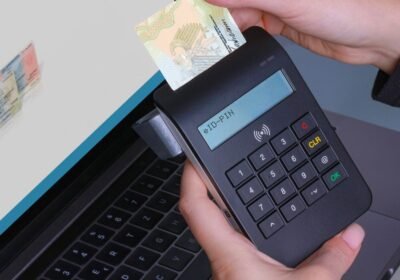
Three vendors have described fraud checks for hiring in the past two months, and each places the check at a different point in the process. Hirevue put its checks inside interviews and assessments on November 10, iCIMS put them at login and in its marketplace on October 16, and Stand8 spans the period before, during and after the interview. Checkr’s survey data, published the same month, shows where employers are actually spending effort.
Hirevue checks identity and location during the interview
Hirevue announced advanced fraud detection capabilities on November 10, built into its platform for interviews and assessments. The release lists four components. Identity verification uses document checks and face liveness detection signals. Location signals draw on IP address, VPN and proxy activity. Interview validation gives interviewers a checklist to work through during the conversation. Unified signal reporting collects flagged signals and supporting evidence for human review and an auditable record.
The release says these build on cheating mitigation tools Hirevue already sells, which show hiring teams when candidates switch browsers, paste from large language models or try to compose answers with an LLM live during an interview. Hirevue says teams can adjust which signals are active and how much weight each carries, based on the job’s requirements and the patterns in their applicant pool. A flagged signal prompts human review and does not by itself establish fraud or decide a hiring outcome, according to the company.
Jeremy Friedman, Hirevue’s chief executive, framed the purpose in the release: “Hiring teams need to know whether the skills they’re seeing are real and whether the person demonstrating them is the person they’ll hire.” He added that the company checks multiple signals during the hiring workflow, with clear expectations for candidates and notifications that prompt recruiters to ask for more information.
iCIMS puts the first checks at the application door
iCIMS announced a candidate fraud detection framework on October 16 with three levels. The first is native controls in its applicant tracking system: it blocks logins that use passwords known from breach data, filters automated submissions with hCaptcha, restricts access from high-risk locations through geoblocking and IP controls, and confirms a candidate controls the account through one-time passcodes and email verification. The company says it blocked more than 417,000 breached passwords in 2025 alone.
The second level is a new Fraud Detection category in the iCIMS Marketplace, with Socure and ApplicantX by Brilliant as the first integration partners. The third is a set of badges that show customers which marketplace partners strengthen fraud detection. Eric Connors, iCIMS chief product officer, said in the release that a multi-layered approach is necessary and that the strongest defense is built into how hiring actually works, from workflows and controls to review steps.
The placement differs from Hirevue’s. iCIMS acts before a recruiter sees an application, where the threats are credential stuffing and automated volume. Hirevue acts once a candidate is already in a live interview or assessment, where the threat is a different person or an assistant doing the work.
Stand8 spreads verification across the whole relationship
Stand8 launched a verification platform on September 28 that confirms identity before, during and after interviews. Before the interview it checks a government-issued ID with a liveness check, plus location and device signals matched to the application. During the interview its recruiters confirm the candidate against the verified identity and screen for proxy interviewing. After day one it reverifies at onboarding and on a risk-based cadence, with background screening and qualification checks in one auditable record.
The release states that the platform informs human decisions and does not make automated hiring decisions, and that candidates receive notice and give consent before identity or biometric verification. It names the Illinois Biometric Information Privacy Act, the Illinois Artificial Intelligence Video Interview Act, the Illinois Human Rights Act as amended effective January 1, 2026, New York City Local Law 144 and California’s automated-decision system employment regulations as the requirements the program is designed around.
Checkr’s survey shows where employer effort sits
Checkr released The Hiring Hoax 2026 on October 15, based on a survey of 3,000 U.S. managers involved in hiring. It found that 40% have interviewed a candidate later found to be using a fake identity, up from 31% in 2025. Formal fraud training among HR teams rose from 17% to 71%. Only 23% of managers are extremely confident their process would catch a fraudulent candidate, and 62% of organizations use third-party background checks, up from 53%.
The distribution of effort is the most useful figure for a buyer. Checkr reports that 63% of organizations focus fraud prevention primarily on the pre-hire stage and 6% prioritize post-hire prevention, while 38% of managers suspect a fraudulent employee already works at their company. Twenty-eight percent of managers said they knowingly advanced a candidate despite suspecting dishonesty because they needed to fill the role quickly. Ilan Frank, Checkr’s chief product officer, said in the release that fraud does not end at the offer and that companies need to verify who they are onboarding.
What it means for the HR leader
Checkr sells verification and Hirevue, iCIMS and Stand8 sell fraud checks, so each report arrives with a product attached, and the survey percentages come from Checkr’s own research. The vendor descriptions are still useful as a map of where checks can sit: at application, in the interview, at onboarding, and on a schedule afterward. In our reading, the three launches cover different stages, and an employer that buys at one stage has not bought the others.
That matters for how HR scopes a purchase. A check inside the interview, such as Hirevue’s, helps only for candidates who reach an interview, and Hirevue’s description of weighting signals by role means someone in HR has to decide the weights. A check at login, such as iCIMS’s, filters automated volume but says nothing about who sits in the video call. A program like Stand8’s reaches past the offer, which is the stage Checkr’s data shows few employers prioritize.
Our earlier reporting covers the same tension from the buyer’s side. We covered the argument that pre-apply verification needs a baseline before it earns a budget line, and we reported on hiring reports that split on whether trust followed AI sourcing. The Checkr figure that 28% of managers advanced a suspect candidate under time pressure belongs next to both: a flag only helps if a recruiter has the time and the authority to act on it.
Questions to put to any vendor
Ask where in the process the check runs and what it does not cover. Ask who sets signal weights and who reviews a flag, since Hirevue and Stand8 both state that a person makes the decision. Ask what candidates are told and what consent is collected, because Stand8 builds notice and consent into its design and cites specific state and city rules. Ask for the audit record a flag leaves behind, which Hirevue and Stand8 both describe as part of their reporting.
Finally, ask what happens after the offer. Checkr’s 6% figure suggests most employers have not answered it. A verification purchase that ends at the interview leaves the onboarding stage, where new hires gain access to systems and data, with the same controls as before.
Source: Hirevue, PR Newswire. Also drawn from iCIMS, Stand8 and Checkr.