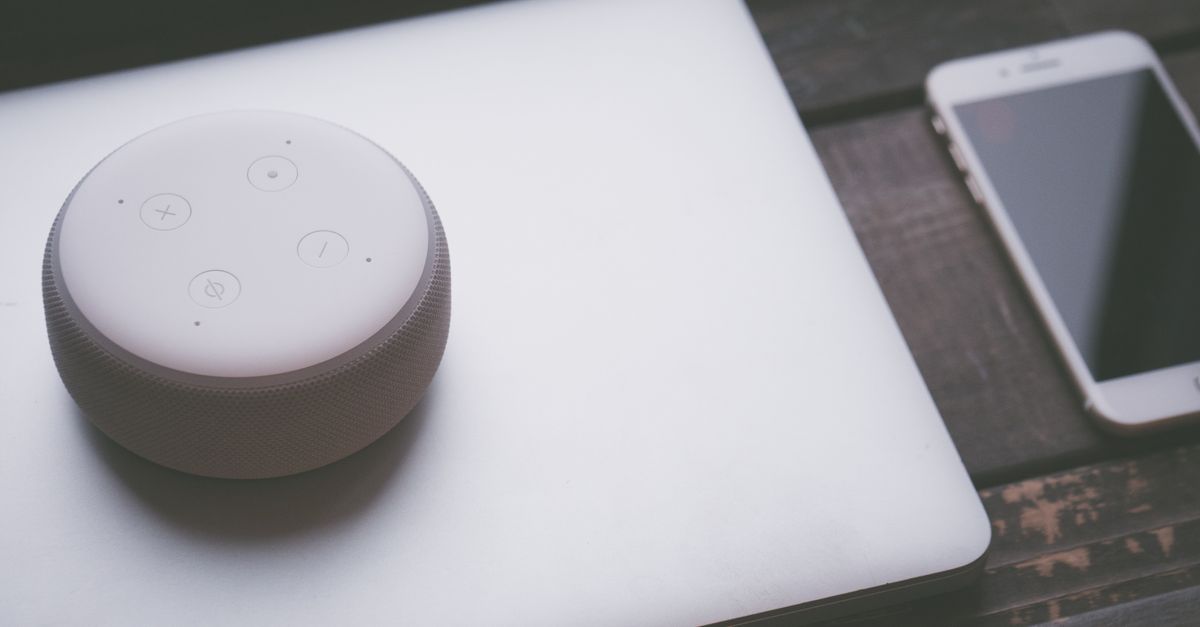
Within two to three years, most people will stop typing to interact with workplace AI and start talking to it instead. That is the central finding of a new report from IEEE Future Directions, built on input from 168 technical experts across 38 countries, and for HR technology the shift is already showing up in the products people teams buy today.
The Interface Shift, Quantified
The report, Technology Megatrends 2030, rates human-AI interaction as the fastest-moving of the 30 technologies it evaluated, ahead of personalized medicine and next-generation energy storage. The panel’s conclusion: within a brief two to three year market timeline, workplace AI moves from typed prompts toward what the report calls real-time, cognitive audio and video interactions.
“For decades, technology forecasting has been about what machines will be able to do,” said Mary Ellen Randall, 2026 IEEE President, CEO, and IEEE Fellow. “This report shifts the conversation to something far more important: how these advances will intersect with one another to shape human lives. The data makes clear that trust, safety, and human connection must guide every major breakthrough in the decade ahead.”
Gartner has been tracking the same curve from the vendor side. It predicts 80% of enterprise software and applications will be multimodal by 2030, up from less than 10% in 2024, a jump that senior director analyst Roberta Cozza has tied to the falling cost of building these systems. McKinsey researchers point to Sony AI’s demonstration that a model costing $100,000 to train in 2022 can now be trained for under $2,000, evidence of how fast the economics have moved.
Why HR Tech Specifically
HR platforms are an early adopter of this shift, not a bystander. Voice capability turned up repeatedly during HR Executive’s vetting of its 2026 HR Top Products, sometimes as an add-on to employee self-service, sometimes as the core interaction layer for the product. That tracks with a shift the sector has already been building toward: conversational AI has become core applicant-tracking infrastructure, not a bolt-on chatbot feature.
The risk is that vendors move faster than trust does. Hiring teams have told researchers plainly that they do not yet trust AI tools to make calls unsupervised, even as those same tools get better at sounding human. A voice interface that feels natural does not automatically feel accountable, and an answer delivered conversationally is harder to audit later than one typed into a form field.
How Fast, and How Far
The arc matters as much as the destination. Text-based generative AI took roughly three years to move from novelty to default enterprise workflow. IEEE’s panel expects the voice and video layer to move faster, not because the underlying models are more capable in some absolute sense, but because the cost curve McKinsey and Gartner both describe means vendors can ship the capability before most buyers have finished evaluating it.
IEEE’s own report is careful not to oversell the pace. Today, many multimodal models still process across only two or three modalities at once, commonly text-to-video or speech-to-image rather than the full sensory range a person uses. The panel’s timeline is explicit that text interaction is not disappearing on any near-term horizon; it is being joined by audio and video as parallel, sometimes preferred, channels. For an HR platform, that reads less as “replace the keyboard” and more as “stop assuming the keyboard is the only entry point.”
The Skeptic’s Case
A faster, cheaper multimodal layer also means a faster, cheaper way to fake one. Video-based interviewing and identity verification tools already sit inside the hiring stack, and the same drop in training cost that makes a legitimate multimodal HR assistant affordable also lowers the bar for synthetic video and voice used to impersonate a candidate or an employee. IEEE’s panel frames trust, safety and governance as the precondition for scaling human-AI interaction responsibly, not an afterthought bolted on once adoption is already underway, and HR is one of the few functions where that failure mode has a direct fraud and compliance cost attached to it.
There is also a plainer, less dramatic risk: sunk cost. A platform that spent the last three years building a polished, well-audited text workflow is not eager to admit that workflow is now a legacy interface. Buyers should expect vendors to describe voice and video support as additive long after it has become the primary way employees actually use the product, simply because the marketing has not caught up to the usage data.
What It Means for the HR Leader
Three things change once voice and video become the default way employees interact with HR systems, rather than an accessibility feature bolted onto a text-first product.
First, procurement criteria shift. A benefits chatbot or a review tool built for typed prompts does not automatically pass an accessibility or bias audit once it starts listening and watching. Teams evaluating multimodal vendors need to ask what happens to the audio and video data, how long it is retained, and whether it trains the model further.
Second, recordkeeping gets harder before it gets easier. A typed HR interaction leaves a searchable transcript by default. A voice or video interaction needs that transcript generated and stored on purpose, which matters for recordkeeping obligations and internal investigations alike.
Third, the accessibility case is real and underused. Voice interfaces can open self-service HR tools to employees who struggle with text-heavy portals, from frontline and deskless workers to people with visual or motor impairments. Leaders who treat multimodal AI purely as a UX upgrade are missing the compliance upside it also represents.
None of this requires an HR department to have an opinion on Sony AI’s training costs. It does require treating whether the interface talks back, and how that data is handled once it does, as a real evaluation criterion in the next platform renewal, rather than a demo trick the sales team leads with.
Source: IEEE, via PR Newswire